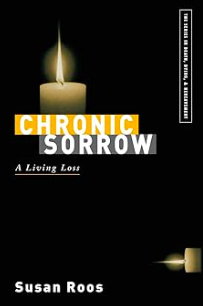
Another of my favourite books on grief is Chronic Sorrow by Susan Roos. One of the most memorable parts of Chronic Sorrow for me, is the discussion on hierarchies of grief. I have many clients come into my office feeling shame for the way they are experiencing grief and sorrow. As we start to talk about the shame, shame begins to highlight the hierarchies of grief: full permission to grieve is granted in the face of losing a child or spouse. If you lose a friend, sibling, parent etcetera, there is less permission and more judgement. I would also add gender to the mix. I witness men being judged significantly more for how (and how long) they grieve than women.
Roos also discusses living loss in Chronic Sorrow, which I now include as a significant part of my practice. When we cannot (for whatever reason) see or talk to someone we love or when someone we love is sitting at the table with us but has no interest in engaging with us, that is living loss; grief and chronic sorrow exist there. We usually think of grief in terms of someone passing, with the most superior and acceptable and allowable form of grief if we lose a child or a spouse (and the longer we’ve been with the spouse, the more permission we have). Many folks feel less than when we are broken-hearted and wrecked when we lose a sibling or our child will not speak with us or our spouse ignores us at the dinner table or or our sibling goes to prison or we have ‘only’ been in a relationship for a year or two. I have found acknowleding the hierarchies of grief in Western culture and holding space for significant grief to exist even when a person is alive, can be incredibly validating and relieving. Grief and sorrow exist in many forms.